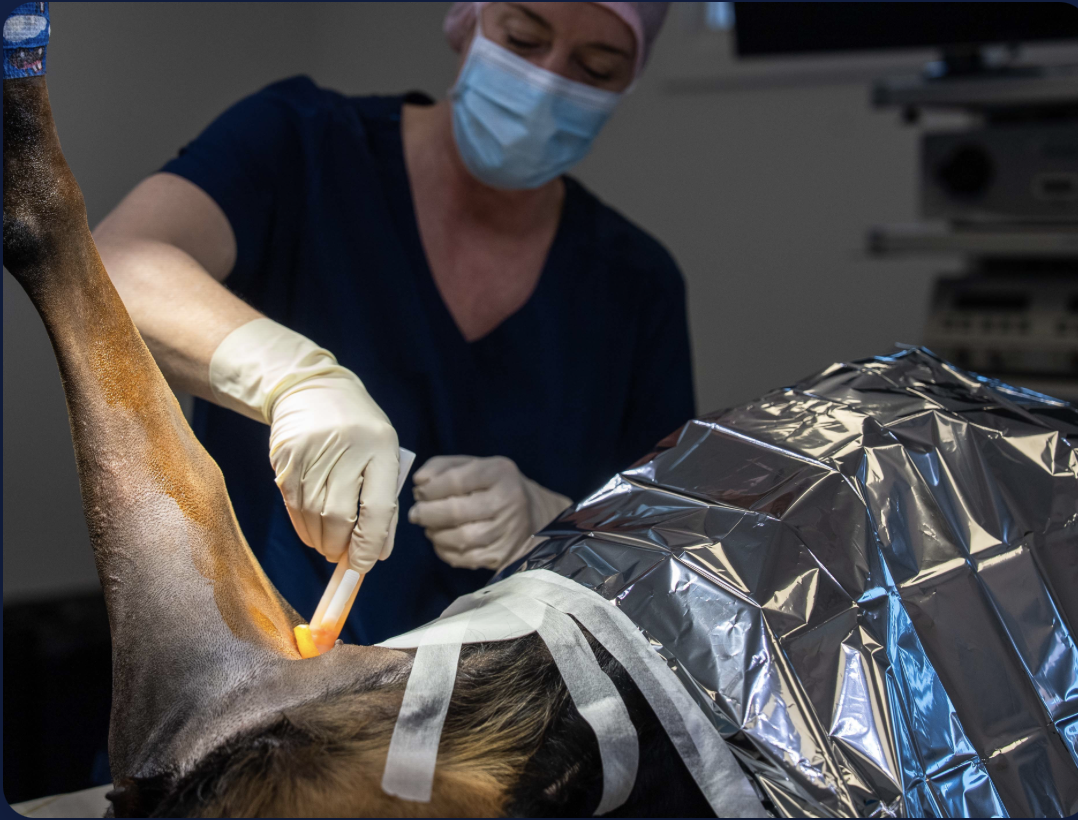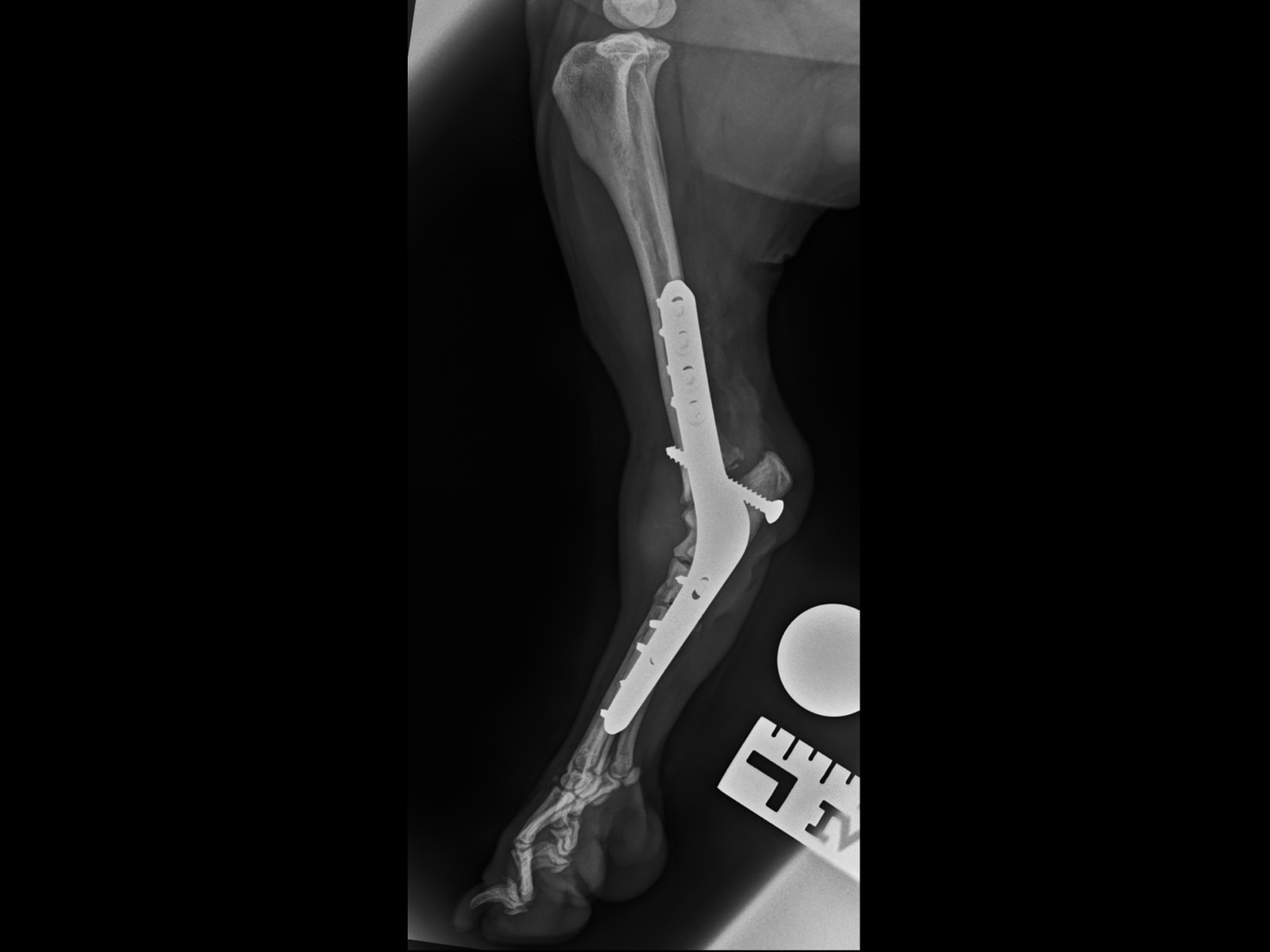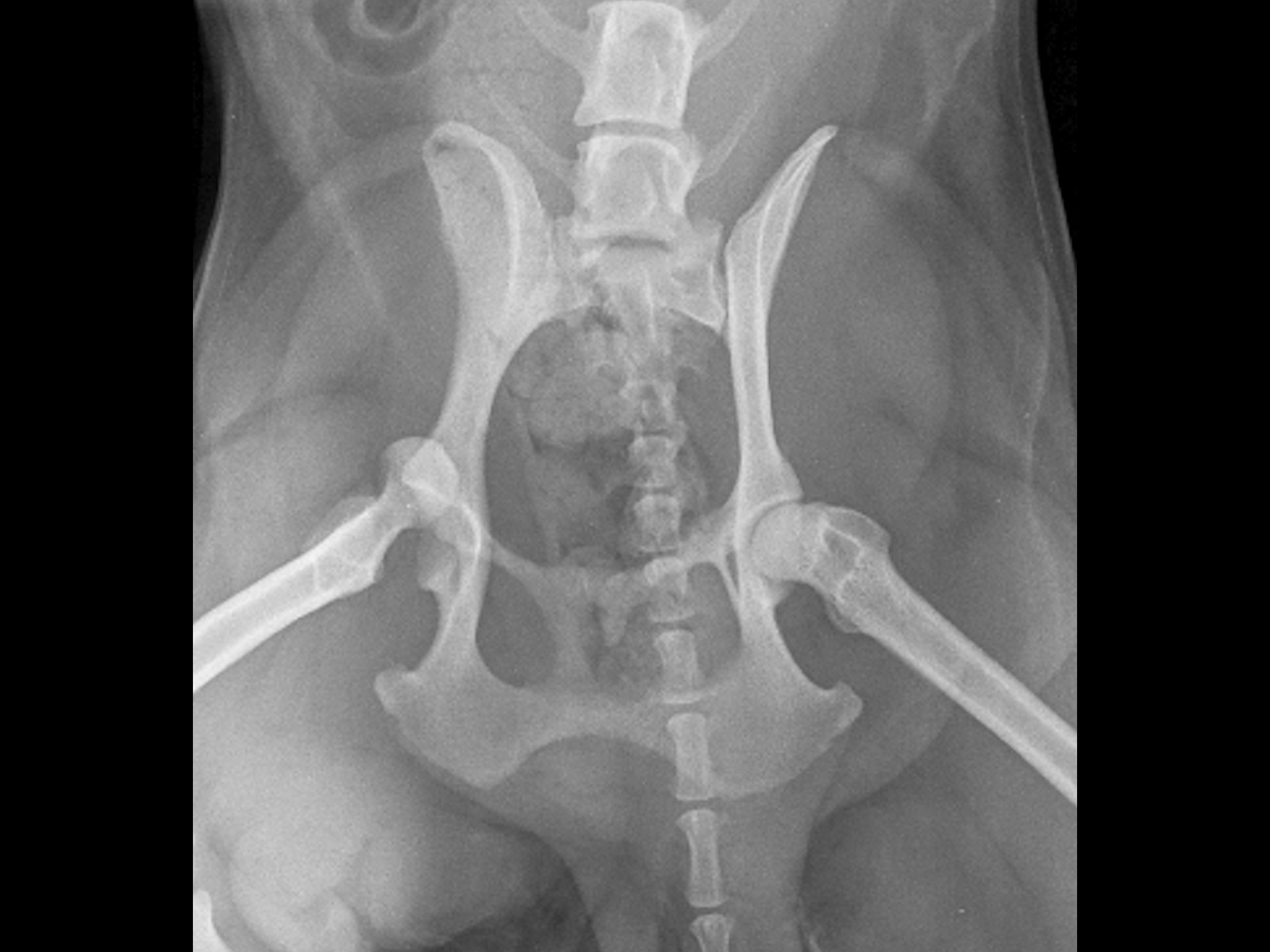
Pancarpal arthrodesis is surgical fusion of the wrist joint (carpus). It is the definitive salvage surgery for fractures, instability, pain or inflammation of the carpus when no better option exists.
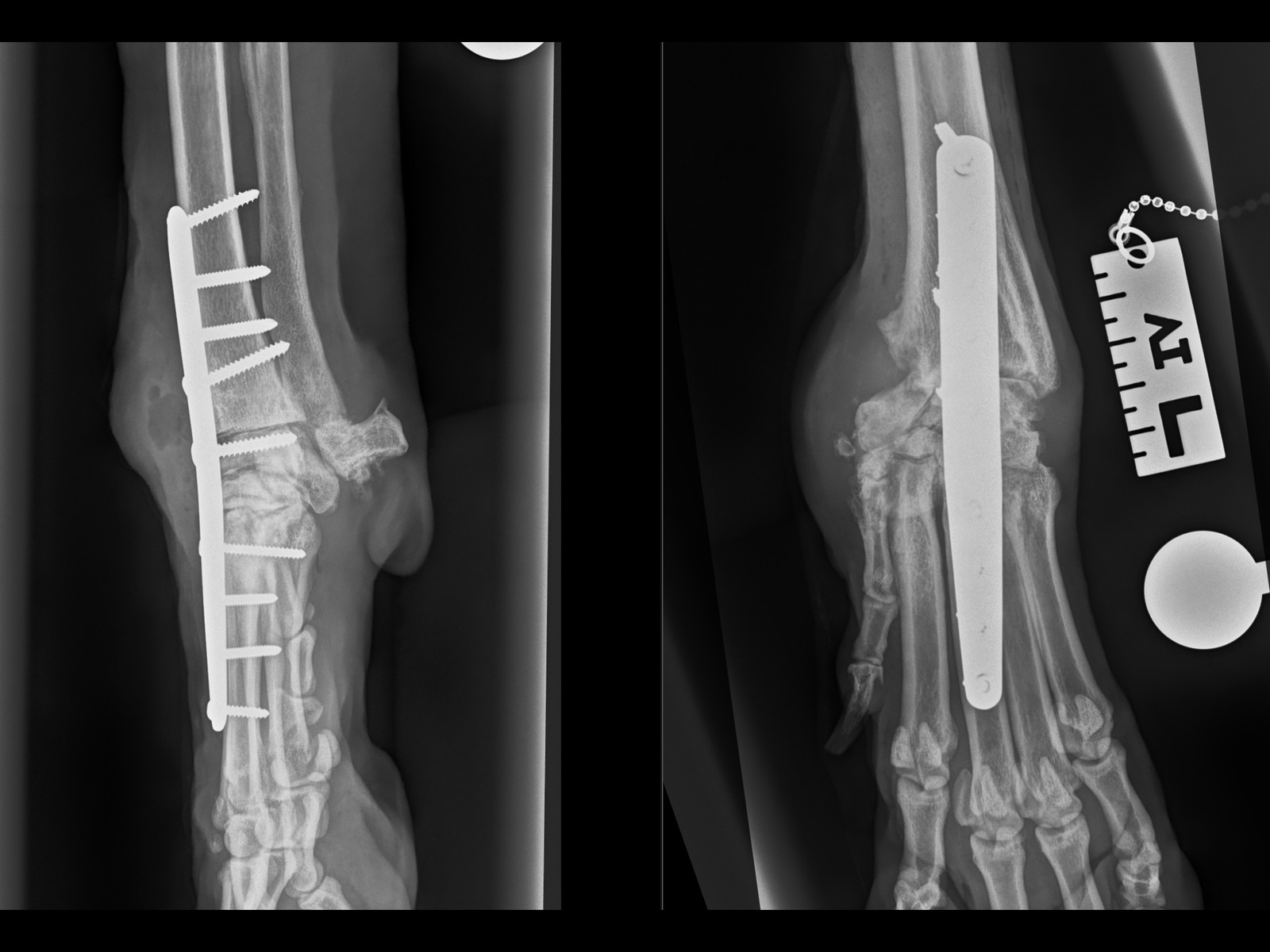
Pancarpal arthrodesis is surgical fusion of the wrist joint (carpus). The most common reasons to do this operation are fractures of the carpus, instability of the carpus, and pain or inflammation of the carpus, usually when no better treatment option exists. It is the definitive solution, is a “salvage” surgery and is not reversible — it is typically performed when all other treatment options have been exhausted or are thought not to be suitable.
Alternatives to consider before pancarpal arthrodesis include:
Outcome after pancarpal arthrodesis is expected to be excellent, with normal or near normal limb function expected. A subtle mechanical lameness is permanent as the wrist joint can no longer flex and extend.
All surgical procedures have the potential for complications. The published complication rate for pancarpal arthrodesis in dogs is just under 20%, of which infection is the most common complication. At Arthurs Veterinary Specialists, we estimate our complication rate to be less than 10%. Of the dogs that get infected, 50% respond positively to antibiotics and resolve completely; the other 50% are more problematic and may need implant removal, which can then expose the arthrodesis site to late failure — although this is a very uncommon, near worst case scenario. The absolute worst case scenario would be uncontrollable infection eventually necessitating amputation, but this would be extremely rare.
Clear recovery guidance so you know what to expect at every stage.
Restricted activity and rest. Pain management and wound care. Short lead walks for toileting only. Your pet will have a follow-up check at 2 weeks for suture removal.
Gradually increasing lead walks. Continued restricted activity at home. Physiotherapy exercises as advised by our team to support healing and muscle rebuilding.
Follow-up imaging to check bone healing. Gradual increase in exercise duration and intensity based on progress. Most dogs show significant improvement by this stage.
Return to controlled normal activity, case dependent. Off-lead exercise can usually be gradually reintroduced. Full recovery is typically achieved within 3–4 months.
Answers to common questions about this procedure.
Whether you're a vet looking to refer or a pet owner wanting to learn more, we'd love to hear from you.
Refer a Case →