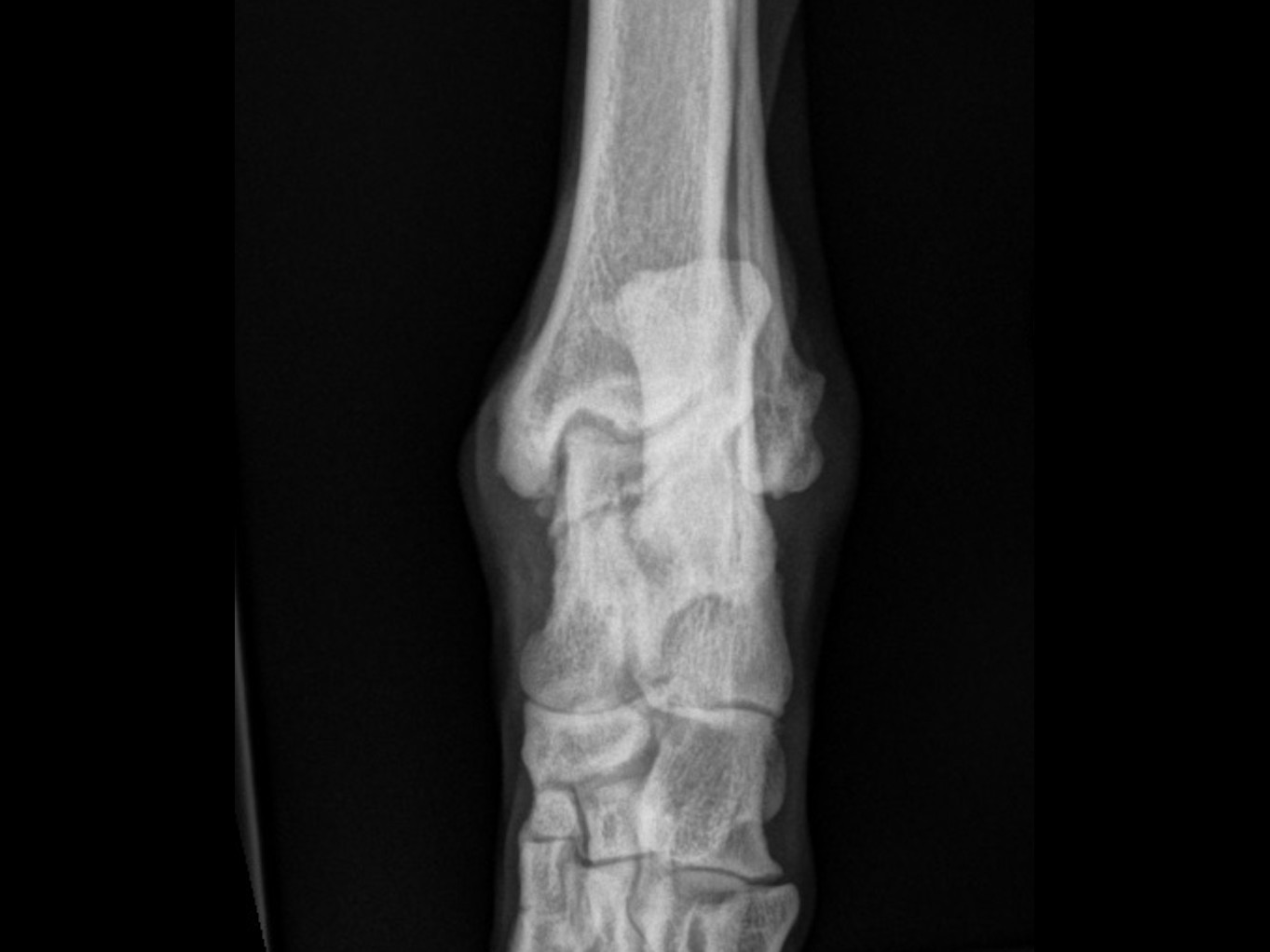
Patellar luxation is a dislocating knee-cap, where the knee-cap slips out of its groove in the femur. It is a developmental condition of dogs and cats; surgery can resolve the lameness where the problem is frequent or not minor.
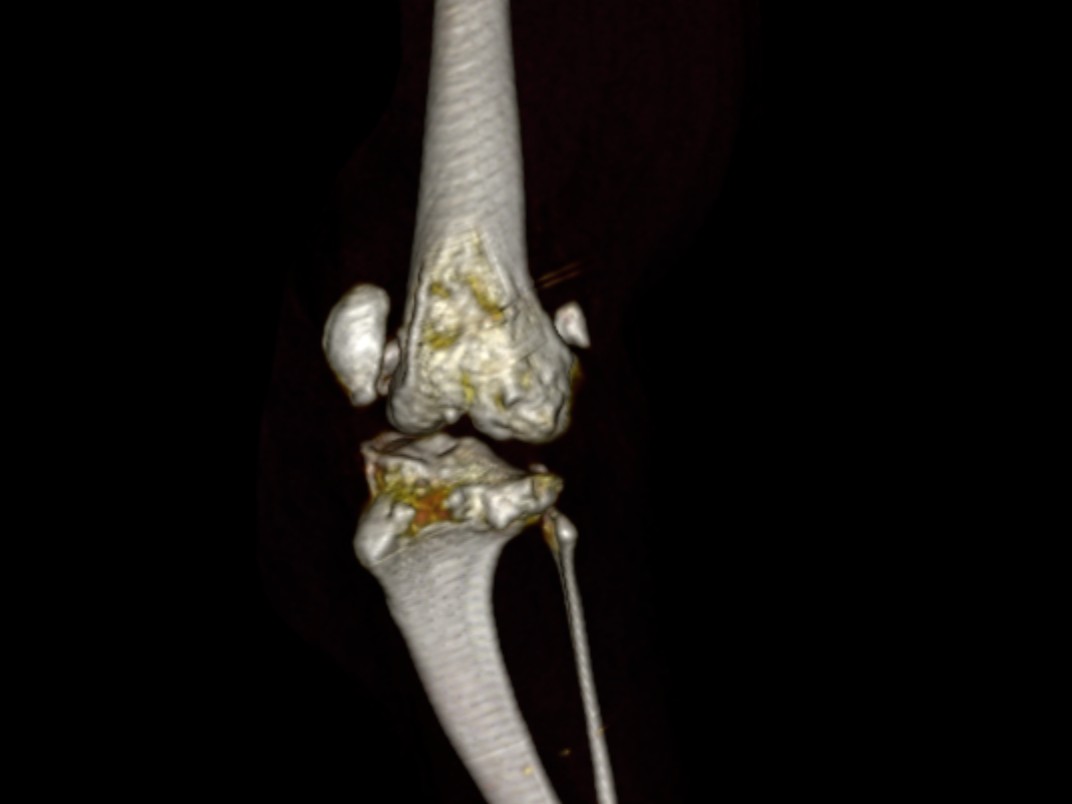
Patellar luxation is a dislocating knee-cap. The knee-cap dislocates out of the groove in the femur that it should run in. It is a developmental condition that typically first shows signs in older puppies, or young adult dogs or cats.
In dogs, a skipping lameness is usually seen; this may be infrequent to very frequent, and occasionally “collapse” may be seen. In cats, an abnormal hindlimb gait appearing a bit like rotation / collapse of the limb is usually seen.
Surgery has several potential steps; exactly which are performed depends on the individual case, and most are decided during surgery:
If the problem is minor, we may not recommend surgical treatment. If the problem is frequent or not minor, we will usually recommend surgery to resolve the problem and improve the lameness.
Most dogs are expected to make an excellent recovery from corrective surgery for patellar luxation with complete resolution of (skipping) lameness.
It is important to realise that patellar luxation and the corrective surgery can both cause some arthritis of the joint, which can cause stiffness or mild lameness. Whilst an excellent result is usually possible, a perfect result may not be possible in every case. A small minority of dogs continue to skip despite full correction of the dislocating kneecap and there being no obvious cause; there is no definitive solution to this.
As for any surgery, post-operative complications are possible. These are uncommon but can include infection, wound breakdown, implant failure and tibial tuberosity fracture. Patellar re-luxation is a possible complication that can affect up to 10% of cases; usually this can be resolved with a further surgery.
Clear recovery guidance so you know what to expect at every stage.
Restricted activity and rest. Pain management and wound care. Short lead walks for toileting only. Your pet will have a follow-up check at 2 weeks for suture removal.
Gradually increasing lead walks. Continued restricted activity at home. Physiotherapy exercises as advised by our team to support healing and muscle rebuilding.
Follow-up imaging to check bone healing. Gradual increase in exercise duration and intensity based on progress. Most dogs show significant improvement by this stage.
Return to controlled normal activity, case dependent. Off-lead exercise can usually be gradually reintroduced. Full recovery is typically achieved within 3–4 months.
Answers to common questions about this procedure.
Most dogs return to gentle lead walks within a fortnight, with a gradual return to full activity over 8–12 weeks. We support you with a written rehabilitation plan throughout.
Not always. Mild cases can sometimes be managed conservatively, but persistent lameness or higher-grade luxations usually benefit from corrective surgery to give your dog a comfortable, stable knee.
Patella luxation is a condition where the kneecap slips out of its normal groove. It is most common in small breeds but can affect dogs of any size, often causing intermittent skipping or lameness.
Whether you're a vet looking to refer or a pet owner wanting to learn more, we'd love to hear from you.
Refer a Case →